Garment Customisation Techniques: Pros and Cons
Written and reviewed by iGift Uniform Limited Team · Macau uniform consultants
There are many patterns available for custom-made garments. Today, we will introduce some of the advantages and disadvantages of various pattern customisation and garment customisation methods.
Plastisol Printing
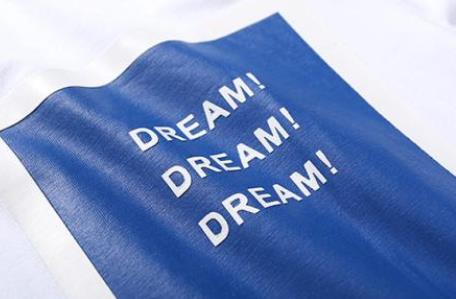
This is a type of pigment printing that uses a paste-like ink (plastisol) to cover the fabric surface and form the desired pattern.
Advantages:
Vibrant colours that do not fade over time.
Disadvantages:
The pattern is slightly thick and has a subtle rubbery texture.
Suitability:
This method can be used for patterns of any colour (colours represented in CMYK four-colour mode) on any base garment colour. For fluorescent colours, fluorescent printing technology can be used.
Heat Transfer Printing
The pattern is colour-printed onto transfer paper (similar to a transparent plastic film), then its outline is cut using a laser cutting machine, and finally, it is heat-pressed onto the garment using a machine.

Advantages:
This process is charged purely based on the pattern area, so the price is not affected by the number of colours in the pattern.
Smaller patterns result in lower costs. Additionally, the patterns are vibrant, with high colour and detail reproduction.
Disadvantages:
The slight rubbery texture can affect breathability and is not suitable for large-area printing.
For many small, irregularly shaped patterns, you will need to create a border of the same colour around the pattern.
Suitability:
It is suitable for printing patterns with 'many colours, gradient effects, or small areas'.
Digital Direct-to-Garment (DTG) Printing
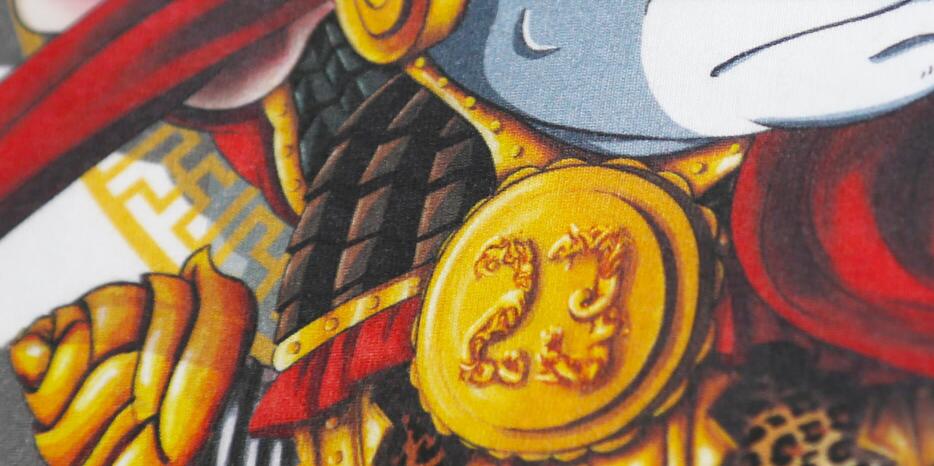
Digital Direct-to-Garment printing works similarly to a conventional printer, allowing desired patterns to be printed directly onto the fabric.
Advantages:
No plate-making is required, and there are low minimum order quantity requirements.
Disadvantages:
Affected by the CMYK colour printing mode, the actual print result may appear darker than the design. For dark-coloured base garments, a layer of fixing agent must be added to improve the coating's fastness, and the printed surface will have a slight gel-like texture.
Suitability:
Suitable for patterns with rich colours or gradient effects.
Satin Stitch Embroidery
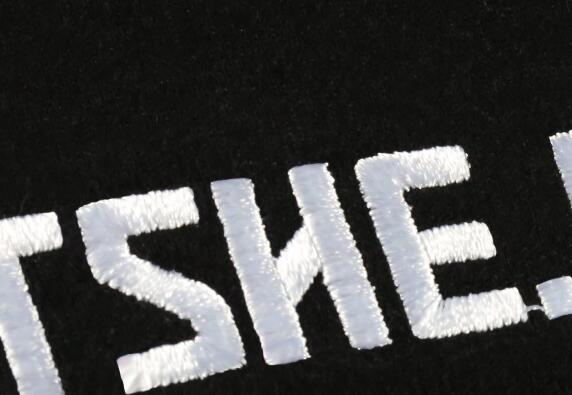
This refers to a wide and narrow stitch, typically wider than 1/8 inch, also known as a ribbon stitch.
It involves densely filling an area using wide and narrow stitches, vine leaf lines, dots, or parts of a pattern.
Advantages:
Embroidery offers a distinct sheen, strong line definition, and a pronounced three-dimensional effect.
Disadvantages:
Not suitable for embroidering very wide graphic elements.
Suitability:
Supports all colours. Minimum size for Chinese characters is 1cm², for English letters 0.5cm², and the finest line is 1.5mm. Up to 6-8 colours can be used.